Top Digital Marketing Strategies That Actually Work for Small Businesses
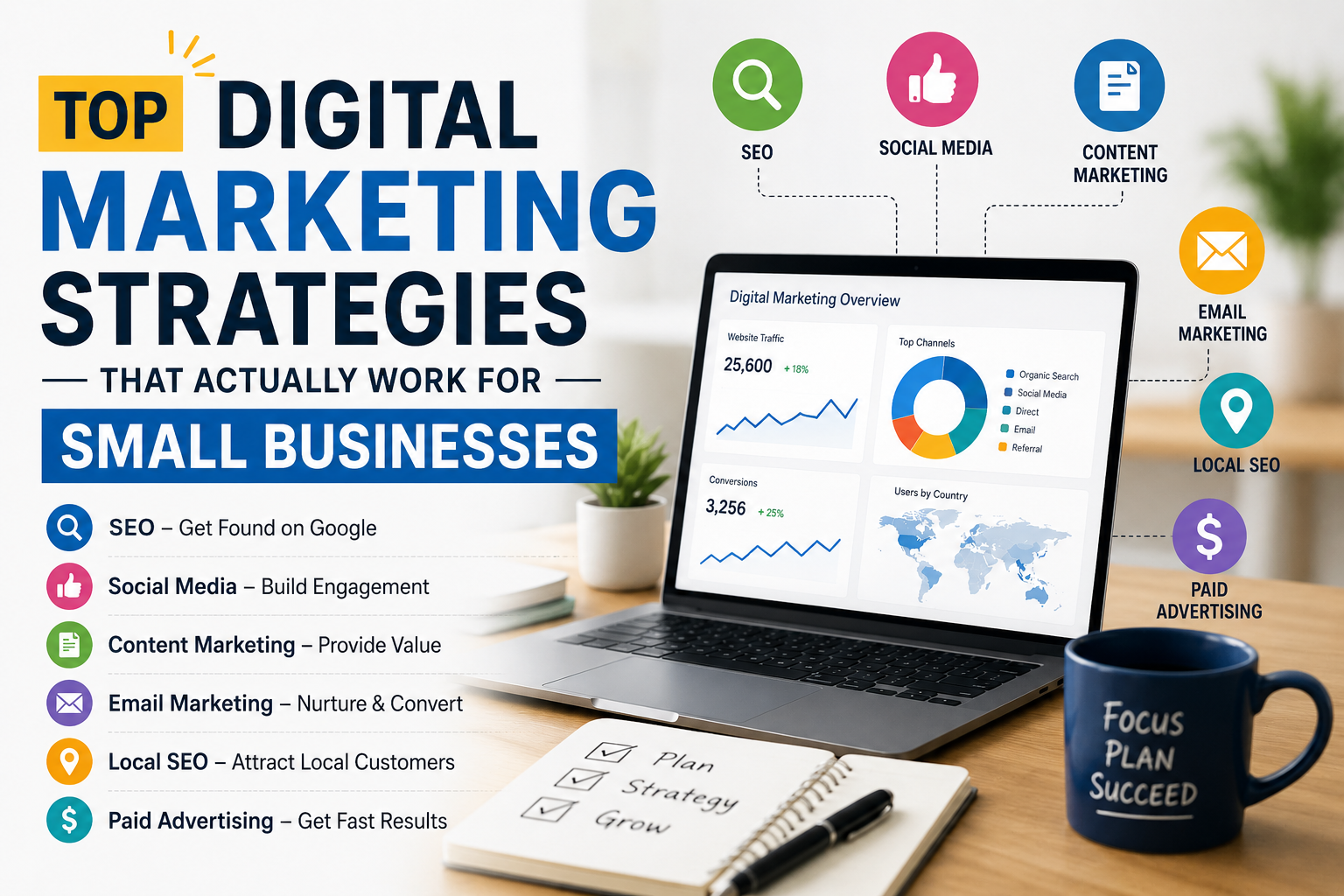
Most small business owners did not start their business to become marketers. They started it because they were good at something. A skill, a product, a service that people needed. Marketing was always the part that came after. The part nobody really explained properly. And now, suddenly, everyone is talking about SEO, social media, content strategy, paid ads, and email funnels. It is a lot. It can feel like you need a full team just to keep up. But here is the thing. You do not need to do everything. You just need to do the right things. And do them with some consistency. This article breaks down what actually works for small businesses in the real world. Not theory. No big-budget campaigns. Just the strategies that genuinely move things forward when you apply them properly.
Why Digital Marketing Has Become Non-Negotiable
Not long ago, a small business could get by on referrals and a decent location. Word of mouth did most of the work. If you were good at what you did, people found out eventually. That still matters. But it is not enough on its own anymore. Before a customer walks through your door or picks up the phone to call you, they have already searched for you online. They have looked at your reviews. They have checked your website or your social media. They have decided whether you seem trustworthy before you even say a word to them. That is just how people behave now. They research everything first. And if your business is not showing up in that research, you are losing customers you never even knew were looking for you. That is why small businesses everywhere are taking digital marketing more seriously. Not because it is trendy. Because it is where the customers actually are.
Search Engine Optimisation: Be There When People Are Looking
SEO sounds technical. And yes, there is a technical side to it. But the idea behind it is actually very simple. When someone types something into Google, they are looking for an answer. SEO is the work that makes your business answer. A plumber who shows up on page one of Google when someone nearby searches for an emergency pipe repair is going to get that call. The plumber who shows up on page four probably will not. It really is that direct.
What Small Businesses Should Focus On First
You do not need to do everything at once. Start with what matters most. Make sure your website clearly explains what you do and where you do it. Use the words your customers actually use, not the industry terms you use internally. Think about how someone who has never heard of your business would search for what you offer. A well-written page that genuinely helps someone find what they need will always perform better than a page stuffed with keywords that reads as if a robot wrote it. And get your business listed properly wherever listings matter. Google Business Profile, local directories, and industry-specific platforms. These things take an hour to set up, and they keep working for years. SEO is a slow build. But once it works, it keeps working without you having to pay for every single click.
Social Media: Stop Trying to Go Viral
A lot of small businesses approach social media with the wrong goal. They want viral moments, big numbers, and overnight attention. That rarely happens, and chasing it wastes a lot of time and energy. What actually builds something real on social media is consistency and honesty. Showing up regularly with content that is genuinely useful or interesting to the people you are trying to reach — not just promotional posts about your latest discount. Real content gives people a reason to follow you.
Pick the Right Platform
Not every platform makes sense for every business. A clothing boutique and a B2B accounting firm are not going to thrive on the same channels. Go where your customers already are. If you run a restaurant, Instagram and Facebook make sense. If you sell professional services to other businesses, LinkedIn is worth your time. If your audience is young and visual, short video content works well almost everywhere right now. Pick one or two platforms. Show up there consistently. Build something real rather than spreading yourself thin trying to be everywhere at once.
Content Marketing: Earn Trust Before You Ask for the Sale
This one takes patience. But it pays off in a way that most other strategies do not. Content marketing is the practice of sharing genuinely useful information with the people you want to reach. A blog post that answers a common question your customers have. A short video that shows how your product actually works. A guide that helps someone solve a problem, even if they never buy from you. It sounds counterintuitive. Why help people for free? Because trust is the currency that converts. People buy from businesses they trust. And trust is built over time through consistent, honest, helpful communication. Not through ads alone. A good digital marketing agency in USA will almost always include content as part of a long-term strategy because the results compound. One useful article can bring in traffic for years. That is very hard to replicate with a paid ad, the moment you stop spending.
Email Marketing: The Channel That Most Small Businesses Ignore
Email keeps getting written off. And it keeps outperforming everything. There is a simple reason for this. When someone gives you their email address, they are telling you they want to hear from you. That is a very different relationship than someone scrolling past an ad. The intent is higher. The attention is better. A small but genuinely interested email list is worth more than a large social media following full of people who barely remember they followed you. Keep your emails useful. Do not just send promotions. Share something worth reading. Make it feel like it came from a real person, because it should. And be consistent without being excessive. Once a week or twice a month is enough for most small businesses to stay front of mind without becoming annoying.
Local SEO: The Strategy Most Small Businesses Are Leaving on the Table
If you serve customers in a specific area, local SEO is probably the highest return thing you can invest time in right now. And the starting point is completely free. Your Google Business Profile is what shows up when someone nearby searches for what you offer. It is what appears on Google Maps. It is often the very first thing a potential customer sees when they search your business name. Most businesses set it up once and forget about it. That is a mistake. Keep it updated. Add real photos regularly. Respond to every review, good or bad. Post updates when you have something worth sharing. Google rewards active, well-maintained profiles with better visibility. It is one of the clearest examples in digital marketing where a little consistent effort delivers a disproportionate result. The Moz Local Search Ranking Factors study is worth reading if you want to understand what actually influences local search rankings. It is research-based and practical, not a sales pitch.
Paid Advertising: Fast Results, But Only If the Foundation Is There
Paid ads work. Google Ads, Meta Ads, and Instagram promotions. When they are set up properly, rly they can bring in customers quickly and consistently. But they are not a shortcut around the basics. If someone clicks your ad and lands on a slow website with a confusing layout and no clear reason to trust you, the ad did its job, and everything else let it down. You paid for the click and got nothing from it. Paid advertising rewards businesses that already have clarity. A clear message, a decent website, and a good understanding of who the customer is. When those things are in place, even a modest budget can deliver real results. If you are new to running ads and not sure where to start, this is one area where getting some outside help, even for a short period, genuinely pays for itself. A lot of businesses have burned through their first ad budget, learning lessons that an experienced digital marketing agency could have helped them skip entirely.
Your Website Is Working Around the Clock Whether You Think About It or Not
Every strategy in this article eventually points someone back to your website. The SEO brings them in. Social media sends them there. The email links to it. The ad lands on it. If the website is slow, confusing, hard to use on a phone, or just does not look like it belongs to a real and trustworthy business, all of that other effort is working against itself. Your website does not need to be complicated. It needs to load fast. It needs to work properly on a mobile screen. It needs to clearly explain what you do and make it easy for someone to take the next step. That is the whole brief. Keep it simple and keep it functional.
Look at the Numbers. They Are Telling You Something.
One of the real advantages of digital marketing over old-school methods is that almost everything is measurable. Google Analytics tells you which pages people visit and where they leave. Email tools show you what people open and what they click. Social platforms show you which content gets traction. You do not need to become a data analyst. But checking in once a week to see what is working and what is not gives you information that makes every decision sharper over time. It is the difference between guessing and knowing.
Mistakes That Slow Small Businesses Down
A few patterns come up again and again. Trying to be on every platform and doing none of them properly. Starting a blog or a newsletter and then abandoning it after a few weeks. Spending money on ads without a clear goal or any tracking in place. Ignoring existing customers completely while chasing new ones. Never looking at the data and just repeating the same thing, we're hoping for different results. None of these disasters is on its own. But they add up. And in a small business where time and money are both limited, they matter more than people realise.
Where to Start If You Are Feeling Overwhelmed
Pick one thing. Genuinely, just one. If people in your area are searching for what you do and cannot find you, start with your Google Business Profile and local SEO. If you have past customers sitting in a spreadsheet who have not heard from you in months, start with an email. If your website looks like it was built ten years ago and never touched since, start there. Digital marketing is not a race to implement everything at once. It is a practice. Something you build up over time, learn from, adjust, and improve. The businesses that win are not always the ones with the biggest budgets or the most polished strategy documents. They are usually the ones that just keep showing up. Consistently, honestly, and with some attention to whether what they were doing was actually working. That is really all it takes to get ahead of most of the competition.
