Why Businesses Need Professional Mobile App Development Services
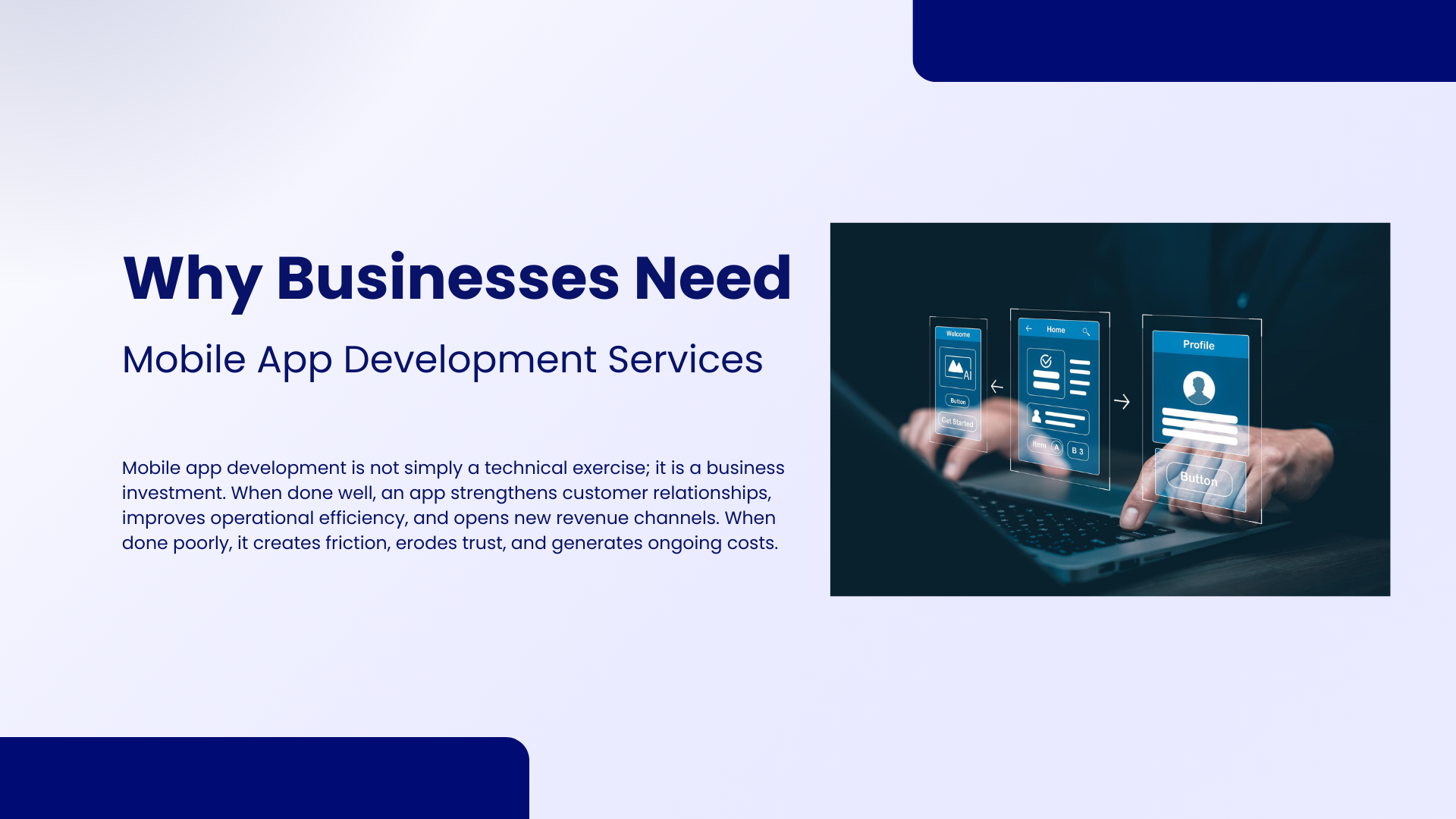
Mobile applications have become one of the most direct lines of communication between a business and its customers. Today, people reach for their phones before they reach for a laptop, and companies that ignore this shift are often left behind. Whether it is a retail brand, a healthcare provider, or a logistics company, having a functional mobile presence is no longer a nice-to-have; it is a practical necessity. But simply having an app is not enough. How that app is built matters enormously. A poorly designed or unstable application can frustrate users, damage a brand's reputation, and ultimately cost more money than it saves. This is why the conversation around mobile app development has moved beyond "should we build an app?" to "who should build it, and how?"
Understanding Professional Mobile App Development
There is a noticeable difference between building an app quickly and building one properly. On the surface, the options available to businesses seem straightforward: use a DIY app builder, hire a freelancer, or work with a professional development agency. Each path has its trade-offs, and understanding them helps clarify why professional development tends to produce better outcomes. DIY app builders are accessible and inexpensive, but they come with rigid templates, limited customisation, and almost no room for growth. Freelancers can offer more flexibility and a personal touch, but they often work in isolation without access to a broader team, which can create gaps in design, testing, and post-launch support. Professional development agencies, on the other hand, typically bring a full team to the table: designers, developers, QA engineers, and project managers. They approach app development as a structured process that includes research, user experience planning, iterative testing, and long-term scalability. The result is not just an app that works on day one, but one that can evolve alongside the business.
Benefits of Hiring Professional Developers
One of the most visible advantages of professional development is the quality of the user experience. A well-designed app feels intuitive; users do not have to think too hard about where to tap or how to navigate. Achieving that level of simplicity actually requires a great deal of deliberate work in design and usability testing, which professional teams are trained to do. Security is another area where professional development pays off. Consumer trust is fragile, and a single data breach can cause lasting damage. Professional developers apply established security protocols, encrypt sensitive data, and build apps that are resistant to common vulnerabilities. This is especially critical for businesses in finance, healthcare, or e-commerce, where user data is particularly sensitive. Scalability is often overlooked at the start of a project, but it becomes very important over time. A professionally built app is designed to handle the growth of more users, more features, and more data without requiring a complete rebuild. This kind of forward-thinking architecture is difficult to achieve without experience and proper planning. Performance optimisation and ongoing maintenance are equally important. Apps need regular updates as operating systems evolve and user expectations shift. Professional teams offer structured support after launch, ensuring the app continues to function smoothly and remains compatible with new devices and software versions.
Long-Term Cost Efficiency
It is tempting to view professional development as an expensive choice compared to faster, cheaper alternatives. But this perspective tends to ignore what happens after the initial build. Apps developed without proper architecture often accumulate technical debt and small structural problems that compound over time and become expensive to fix. Rebuilding a poorly constructed app from scratch costs significantly more than building it correctly the first time. Beyond the financial cost, there is the cost of user churn. If an app crashes frequently, loads slowly, or fails to deliver a good experience, users will simply stop using it. Recovering from a damaged reputation is a lengthy and uncertain process. Investing in professional development from the outset is, in most cases, the more economical long-term decision.
Technology and Innovation
The mobile technology landscape is not static. Artificial intelligence, cloud integration, cross-platform development frameworks, and real-time data processing are reshaping what apps can do and what users expect from them. Businesses that want to stay relevant need apps that can take advantage of these capabilities. Professional development teams stay current with these trends as a core part of their work. They evaluate which technologies are appropriate for a given project, and they know how to integrate them in ways that are stable and maintainable. Whether that means incorporating AI-driven personalisation or building a cross-platform solution that runs smoothly on both iOS and Android, experienced developers bring technical judgment that goes beyond simply writing code.
Choosing the Right Development Partner
For businesses in competitive markets, choosing the right development partner is a strategic decision. There are several factors worth careful consideration. Experience is the most obvious: a team with a track record in relevant industries will understand common challenges and know how to avoid them. Portfolio review is equally important. Looking at previous work gives a sense of design quality, functional complexity, and the range of problems a team has solved. Communication style and project management approach also matter. Development projects involve many decisions, and a team that communicates clearly and involves the client in the process tends to produce outcomes that align with business goals. For companies operating in the region, partnering with a custom mobile app development agency in Dubai can offer the added advantage of local market knowledge, cultural understanding, and accessible communication across time zones. Post-launch support is one factor that is often underestimated during the selection process. The relationship with a development partner should not end at launch. Ongoing support, performance monitoring, and feature updates are all part of a healthy, long-term engagement.
Conclusion
Mobile app development is not simply a technical exercise; it is a business investment. When done well, an app strengthens customer relationships, improves operational efficiency, and opens new revenue channels. When done poorly, it creates friction, erodes trust, and generates ongoing costs. Professional development services provide the expertise, structure, and accountability that help businesses get this investment right. From initial planning through to long-term maintenance, a professional team brings a level of discipline and skill that is difficult to replicate through shortcuts. For businesses serious about their digital presence, that foundation is worth building properly.
